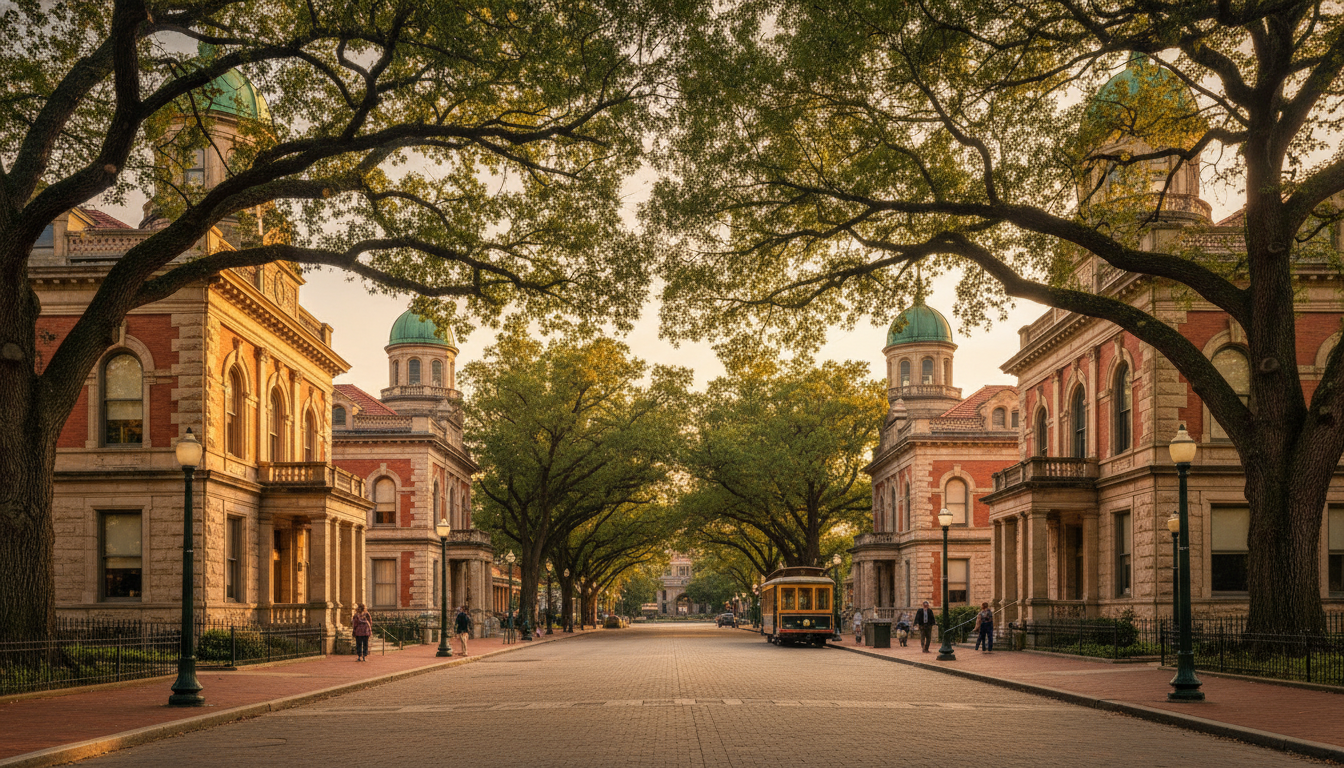
Long before "wellness" became an industry and "spa day" entered the vocabulary, there was Hot Springs, Arkansas — a small city in the Ouachita Mountains that became the birthplace of American bathing culture. The thermal waters here have drawn visitors for thousands of years, and the eight magnificent bathhouses along Central Avenue — known collectively as Bathhouse Row — represent the most architecturally significant collection of bathing facilities in North America.
This guide traces the story from ancient indigenous use through the golden age of American bathing, the decline of the mid-20th century, and the modern renaissance that's bringing Bathhouse Row back to life.
Ancient Origins: The Neutral Ground
Archaeological evidence suggests the thermal springs were used by indigenous peoples for at least 5,000 years. The Caddo, Quapaw, Choctaw, and Cherokee nations all visited these springs — and remarkably, the area was considered neutral ground where hostile tribes could bathe in peace. This tradition of the hot springs as a place of healing and truce is one of the oldest known examples of geothermal diplomacy.
The springs produce water at approximately 143°F — among the hottest naturally occurring thermal springs in the United States. The water is heated by geothermal processes deep underground and emerges through fractures in the Hot Springs Sandstone formation at a rate of roughly 700,000 gallons per day.
1832: America's First Federal Reserve
In 1832 — 40 years before Yellowstone became the first national park — President Andrew Jackson signed legislation setting aside four sections of land around the hot springs as a federal reservation. This was the first time in American history that the federal government acted to protect a natural resource for public use. The move was driven by concerns that private interests would monopolize the springs.
📋 Timeline at a Glance: 1832 — Federal reserve established. 1878 — First permanent bathhouse built. 1912–1923 — All eight current bathhouses constructed. 1921 — Hot Springs National Park established. 1987 — Bathhouse Row designated a National Historic Landmark.
The Golden Age: Bathhouse Row Takes Shape (1880s–1940s)
The late 19th and early 20th centuries were Bathhouse Row's era of grandeur. Between 1912 and 1923, all eight of the current bathhouses were constructed along Central Avenue, each more architecturally ambitious than the last:
| Bathhouse | Year Built | Style | Current Use |
|---|---|---|---|
| Superior | 1916 | Spanish Colonial | Superior Bathhouse Brewery |
| Hale | 1892/1915 | Neoclassical | Event venue |
| Maurice | 1912 | Renaissance Revival | Under renovation |
| Fordyce | 1915 | Renaissance Revival | NPS Visitor Center & Museum |
| Quapaw | 1922 | Spanish Colonial / Moorish | Modern bathhouse (open for soaking) |
| Ozark | 1922 | Neoclassical | Cultural center & museum |
| Buckstaff | 1912 | Neoclassical | Traditional bathhouse (open since 1912) |
| Lamar | 1923 | Spanish Colonial | Under development |
During this golden age, Hot Springs was the American health resort. Visitors included Al Capone (who reportedly kept a suite at the Arlington Hotel), Babe Ruth, Franklin Roosevelt, and dozens of other notable figures. The city was also famously wide-open — gambling, nightlife, and entertainment thrived alongside the bathhouses, earning it the nickname "The American Spa."
The Fordyce Bathhouse: The Crown Jewel
The Fordyce (1915) is the most architecturally significant bathhouse on the row and now serves as the Hot Springs National Park Visitor Center. Its restored interior features stained glass skylights, ceramic tile work, marble floors, a gymnasium, a bowling alley, and De Soto Fountain. A self-guided tour is free and takes about 45 minutes — it's the best way to understand what the bathing experience was like in Bathhouse Row's heyday.
Decline and Near-Demolition (1950s–1980s)
As modern medicine moved away from hydrotherapy in the mid-20th century, the bathhouses began closing one by one. By the 1970s, only the Buckstaff remained in continuous operation. Several bathhouses fell into serious disrepair, and there were genuine proposals to demolish portions of the row.
The tide turned in 1987 when Bathhouse Row was designated a National Historic Landmark, providing federal protection and funding for restoration. The National Park Service's decision to make the Fordyce a visitor center in 1989 anchored the preservation effort.
Modern Renaissance: Bathhouse Row Today
The 21st century has brought genuine new life to Bathhouse Row:
- Buckstaff Bathhouse: Continuously operating since 1912 — the only bathhouse on the row never to close. Offers traditional thermal baths, whirlpools, and massage. Walk-in or appointment. A traditional bath experience costs about $35–$75.
- Quapaw Baths & Spa: Reopened in 2008 with a modern bathing concept. Four thermal pools (95–104°F) under the original Moorish-style dome. Modern spa services available. Day passes around $25–$40.
- Superior Bathhouse Brewery: Transformed into the only brewery in a national park — beer brewed with thermal spring water. The food is solid, and drinking beer literally brewed from hot spring water is a uniquely Hot Springs experience.
💡 Pro Tip: The free thermal water fountains throughout Hot Springs National Park dispense the same water that feeds the bathhouses. Bring a bottle and try it — the water emerges at 143°F and cools in the fountain system to a drinkable temperature.
Planning Your Visit to Bathhouse Row
- Getting there: Hot Springs is about 55 miles southwest of Little Rock, AR. The closest airport is Little Rock National Airport (LIT).
- Best time: Spring (March–May) and fall (September–November) for comfortable weather. Summer can be hot and humid.
- Budget a full day: Tour the Fordyce (free, 45 min), soak at Buckstaff or Quapaw (1–2 hours), lunch at Superior Brewery, and walk the Grand Promenade trail above the bathhouses.
- Don't miss: The Grand Promenade — a half-mile brick walkway behind Bathhouse Row with views of the spring collection system and the surrounding Ouachita Mountains.
- Parking: Free parking is available at the NPS lots near the Fordyce.
For the full list of hot springs in Arkansas, including modern facilities outside the national park, browse our directory.
Frequently Asked Questions
Can you still bathe in the thermal water at Bathhouse Row?
Yes. The Buckstaff and Quapaw are both open for bathing. Buckstaff offers a traditional experience (individual tubs, attendants) while Quapaw offers a modern communal pool experience. Reservations are recommended but walk-ins are sometimes available, especially on weekdays.
Is the thermal water safe?
Yes. The water is regularly tested by the National Park Service and meets all safety standards. It's naturally sterile when it emerges at 143°F and is cooled to comfortable bathing temperatures before reaching the bathhouse pools. It's even safe to drink from the designated fountains.
How much does it cost to visit Bathhouse Row?
Walking the row, visiting the Fordyce Visitor Center, and using the thermal fountains are all free. Bathing at Buckstaff costs about $35–$75 depending on services. Quapaw day passes are $25–$40. Lunch at Superior Brewery runs $15–$25 per person.
Is Bathhouse Row worth visiting if I don't want to bathe?
Absolutely. The architecture alone is worth the trip. The Fordyce museum tour is excellent and free. The Grand Promenade trail is beautiful. And the history of the area — from indigenous use to Al Capone to the national park — is genuinely fascinating even if you never touch the water.