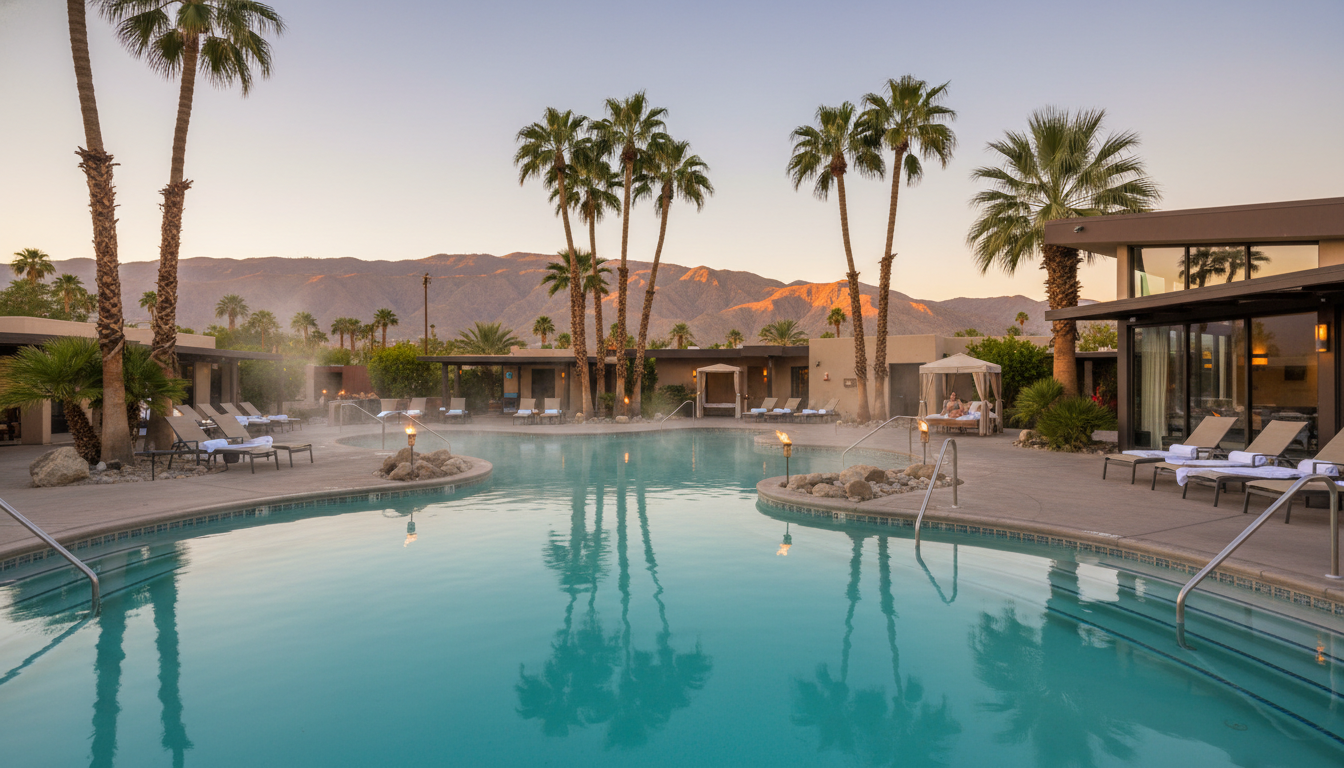
Just 15 minutes north of Palm Springs in the Coachella Valley, Desert Hot Springs sits atop one of the most remarkable natural aquifers in the world. The city's "miracle hill" produces naturally heated mineral water at temperatures between 100°F and 180°F — no artificial heating required. This geological phenomenon has made the small desert city a magnet for wellness seekers, boutique hotel developers, and anyone looking for an affordable alternative to Palm Springs luxury.
This guide covers everything you need to plan your visit: the best resorts, what makes the water special, when to go, and how to get the most out of your stay.
What Makes Desert Hot Springs Water Special?
The science behind Desert Hot Springs is genuinely fascinating. The city sits above the Mission Creek Fault, which separates two aquifers running side by side — one carrying cold water and one carrying hot water. The hot side produces mineral-rich water naturally heated by geothermal energy deep underground, emerging at temperatures between 100°F and 180°F depending on depth and location.
The water is rich in beneficial minerals including:
- Lithium: Naturally calming — associated with mood stabilization
- Sulfate: Anti-inflammatory properties, beneficial for joint pain
- Calcium and magnesium: Muscle relaxation and bone health
- Silica: Skin health — often called "nature's beauty mineral"
Many visitors report noticeable relief from arthritis, fibromyalgia, skin conditions like psoriasis, and general muscle tension after just a few days of regular soaking. While these aren't medically proven claims, the anecdotal evidence from decades of visitors is compelling.
Top Resorts and Spas in Desert Hot Springs
Desert Hot Springs has transformed from a sleepy desert town into a thriving boutique hotel district. Here are the standouts:
| Resort | Price/Night | Pool Temp | Vibe |
|---|---|---|---|
| Two Bunch Palms | $350–$600 | 104°F | Luxury wellness retreat |
| Azure Palm Hot Springs | $150–$300 | 92–104°F | Upscale adults-only |
| El Morocco Inn & Spa | $120–$250 | 92–102°F | Moroccan-themed oasis |
| The Spring Resort & Spa | $100–$200 | 96–104°F | Mid-range, great value |
| Miracle Springs Resort | $90–$170 | 84–104°F | Budget-friendly, family OK |
💡 Pro Tip: Most Desert Hot Springs resorts are adults-only. If you're traveling with kids, confirm the policy before booking. Miracle Springs is one of the few that welcomes families.
Browse the full list of California hot springs in our directory, including resorts, day-use facilities, and primitive springs throughout the state.
Best Time to Visit Desert Hot Springs
The desert climate makes timing important:
- October – April (Peak Season): Daytime highs of 70–90°F, perfect for poolside relaxation. Hotel rates are higher and availability is tighter. Book 4–6 weeks ahead for weekends.
- May – June (Shoulder): Temps hit 100°F+, but hotel rates drop 30–40%. Still very soakable, especially mornings and evenings.
- July – September (Off-Season): Extreme heat (110°F+). Many visitors still come for evening soaks. Rates are at their lowest — expect 40–60% discounts. Pool soaking after sunset is surprisingly pleasant.
Getting There and Getting Around
- From Palm Springs Airport (PSP): 15-minute drive north on Indian Canyon Drive
- From Los Angeles (LAX): About 2 hours east via I-10
- From San Diego: About 2.5 hours northeast via I-15 and I-10
- Car needed: Yes — there's limited public transit and rideshare availability can be spotty
What Else to Do in the Area
Desert Hot Springs is a soaking destination first, but there's plenty to fill the hours between soaks:
- Joshua Tree National Park: 30 minutes north — world-class hiking, rock climbing, and desert photography
- Palm Springs downtown: 15 minutes south — restaurants, shopping, mid-century modern architecture tours
- Cabot's Pueblo Museum: A hand-built Hopi-inspired pueblo right in Desert Hot Springs — free admission
- Windmill tours: The iconic San Gorgonio Pass windmills offer guided tours
Tips for Getting the Most Out of Your Soak
- Hydrate constantly. The desert climate and hot water are a dehydrating combo. Bring a reusable water bottle to poolside.
- Limit soak sessions to 20–30 minutes. Alternate between the pool and a lounge chair to avoid overheating.
- Book a spa treatment. Many resorts offer mineral water wraps and treatments that complement the soaking.
- Plan for evenings. Some of the best soaking happens after dark when the desert cools off and the stars come out.
- Skip the sunscreen in the pool. Rinse off sunscreen before entering mineral pools — it disrupts water chemistry and creates a film. Reapply when you get out.
Frequently Asked Questions
Is Desert Hot Springs the same as Palm Springs?
No. They're separate cities about 15 minutes apart. Palm Springs is known for mid-century architecture, shopping, and nightlife. Desert Hot Springs is quieter, more affordable, and specifically known for its mineral hot springs water. Many visitors use Desert Hot Springs as a more relaxed, wellness-focused base for exploring the Coachella Valley.
Can I visit the hot springs without staying at a resort?
Some resorts offer day passes, but availability is limited and not widely advertised. Your best bet is to book at least one night — most resorts include unlimited pool access with your room. Day spas in the area also offer mineral water treatments without overnight stays.
Is the water safe to drink?
The mineral water emerging from the aquifer meets drinking water standards and some resorts pipe it directly to room taps. However, the high mineral content gives it a distinct taste. Bottled water is recommended for everyday hydration.
How long should I stay?
A weekend (2–3 nights) is the sweet spot for a wellness getaway. One night feels rushed, and the therapeutic benefits of mineral water soaking are cumulative — you'll feel the difference most on day 2 or 3. If combining with Joshua Tree and Palm Springs, plan 4–5 nights.