Idaho is the hot springs capital of the American West. With over 130 known natural hot springs — more than nearly any other state — the Gem State offers unparalleled opportunities for backcountry soaking in some of the most stunning wilderness settings in the country.
Unlike Colorado or California where most hot springs are developed resorts, Idaho's best soaks are primitive: natural pools in remote canyons, riverside rock formations, and forest clearings that you reach by hiking, driving dirt roads, or even rafting. Most are free. Many have no facilities at all. And that's exactly the point.
This guide covers our 8 top primitive springs, with trail details, water temperatures, and the practical info you need to plan your trip. For the full state listing, check our Idaho hot springs directory.
What Makes Idaho's Primitive Springs Different
Before diving in, understand what "primitive" means in this context:
- No facilities: No changing rooms, restrooms, or showers (usually)
- Free or donation-based: Most have no admission fee
- You maintain the pool: Some require clearing debris, adjusting rocks, or mixing hot/cold water
- Clothing norms vary: Most primitive springs have a clothing-optional culture
- No cell service: Plan accordingly — download maps offline and tell someone your plans
- Leave No Trace is essential: Pack out everything you bring in
⚠️ Safety Note
Always check current conditions before heading to primitive springs. Roads can wash out, springs can be seasonally dry or dangerously hot, and wildlife (including bears) is present in many areas. Let someone know your itinerary and expected return time.
1. Goldbug Hot Springs — The Instagram Star
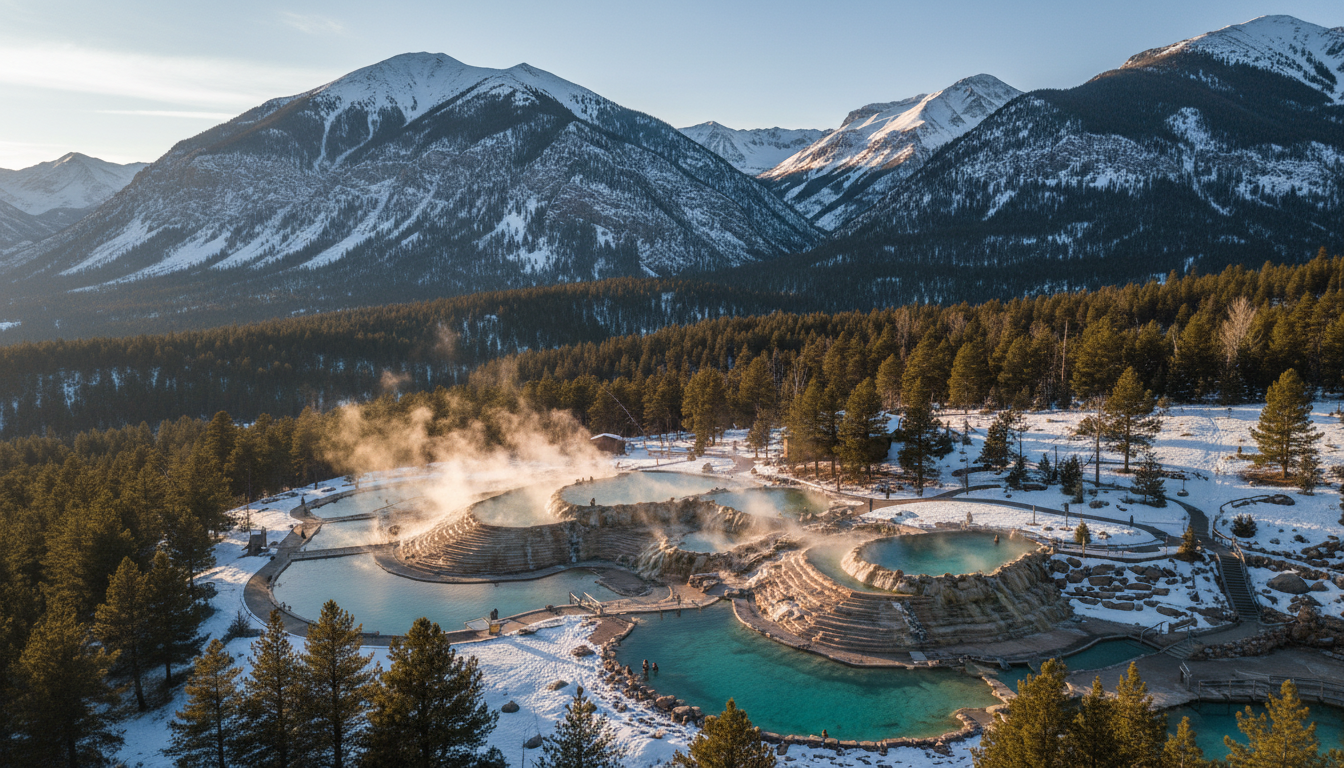
Goldbug is arguably Idaho's most photographed hot spring, and for good reason. A 2-mile hike up a steep canyon near the town of Salmon brings you to a series of cascading pools carved into cream-colored travertine terraces, with water temperatures around 100–110°F. The multi-tiered pools spill into each other against a backdrop of granite canyon walls.
- Hike: 2 miles one way, ~1,200 feet elevation gain (moderate-strenuous)
- Water temp: 100–110°F across multiple pools
- Best pools: The upper terrace pools offer the most privacy
- When to go: Weekdays for solitude; weekends can get crowded in summer
- Cost: Free (USFS land)
2. Kirkham Hot Springs — The Easiest Access
If you want a primitive hot spring experience without a strenuous hike, Kirkham is your answer. Located right along the South Fork of the Payette River near Lowman, hot water cascades down a rock face directly into the river below. Multiple pools of varying temperatures sit right at the water's edge — you can literally go from a 108°F soak to a cold river plunge in seconds.
- Hike: 0.1 miles from the parking area (basically roadside)
- Water temp: 100–108°F in pools; mix with river for cooler temps
- Campground: USFS Kirkham Campground adjacent ($15/night)
- Popularity: High — arrive early on weekends or visit midweek
- Cost: Free (parking fee at campground)
3. Boat Box Hot Springs — The River-Access Adventure
Accessible only by raft, kayak, or jet boat on the Middle Fork of the Salmon River, Boat Box is one of Idaho's most exclusive primitive soaking experiences. Natural rock pools overlooking the wild river canyon — you'll feel like you've discovered them yourself.
- Access: River only — typically visited during multi-day Middle Fork rafting trips
- Water temp: 100–115°F
- Best time: July–September (peak rafting season)
- Planning: Requires a Middle Fork permit (lottery system) or guided trip ($2,000–$3,000 for 6-day trips)
4. Jerry Johnson Hot Springs — The Forest Cathedral
A gentle 1-mile hike from Highway 12 near the Lochsa River brings you to multiple pools nestled in an old-growth western red cedar forest. The towering trees create a cathedral-like canopy overhead, and the warm-to-hot pools (104–112°F) accommodate multiple groups with decent privacy between them.
- Hike: 1 mile one way on a well-maintained trail (easy)
- Water temp: 104–112°F across several pools
- Setting: Old-growth cedar forest — one of the most beautiful settings of any Idaho spring
- Season: Year-round access, though the highway occasionally closes for snow
- Cost: Free (USFS land)
5. Burgdorf Hot Springs — The Historic Outpost
A former mining-era resort in the backcountry north of McCall, Burgdorf features a large soaking pool (30 x 50 feet) fed by natural hot springs at about 104°F. The rustic cabins, hand-built log structures, and remote mountain location create a uniquely authentic Idaho experience. It's the closest thing to time travel in the hot springs world.
- Access: 30 miles of dirt road from McCall (rough but manageable in summer for most vehicles)
- Water temp: ~104°F in the main pool
- Lodging: Rustic cabins available ($50–$100/night)
- Season: Summer/fall only — road is impassable in winter without snowmobile
- Cost: $8/person for day soaking
6. Weir Creek Hot Springs — The Perched Pools
Another Highway 12 gem, Weir Creek requires a short but steep scramble down to tiered pools perched above the Lochsa River. The pools offer different temperatures at each level, and the river gorge views from the upper pools are spectacular. Less crowded than nearby Jerry Johnson.
- Hike: 0.3 miles with a steep descent (moderate)
- Water temp: 100–106°F across tiered pools
- Advantage: Fewer visitors than Jerry Johnson despite being nearby
- Cost: Free (USFS land)
7. Sunbeam Hot Springs — The Roadside Soak
Located right along Highway 75 on the Salmon River between Stanley and Challis, Sunbeam is as accessible as primitive springs get. Hot water emerges from the riverbank and pools along the shore. The temperature varies wildly depending on river level and which pool you choose — some are scalding, others are lukewarm where they mix with river water.
- Hike: Steps from the pullout (roadside)
- Water temp: 90–120°F (highly variable)
- Caution: Test water temperature carefully before getting in — some vents are dangerously hot
- Best time: Late summer/early fall when river levels are lower and pools are better defined
- Cost: Free
8. Skillern Hot Springs — The Hidden Gem
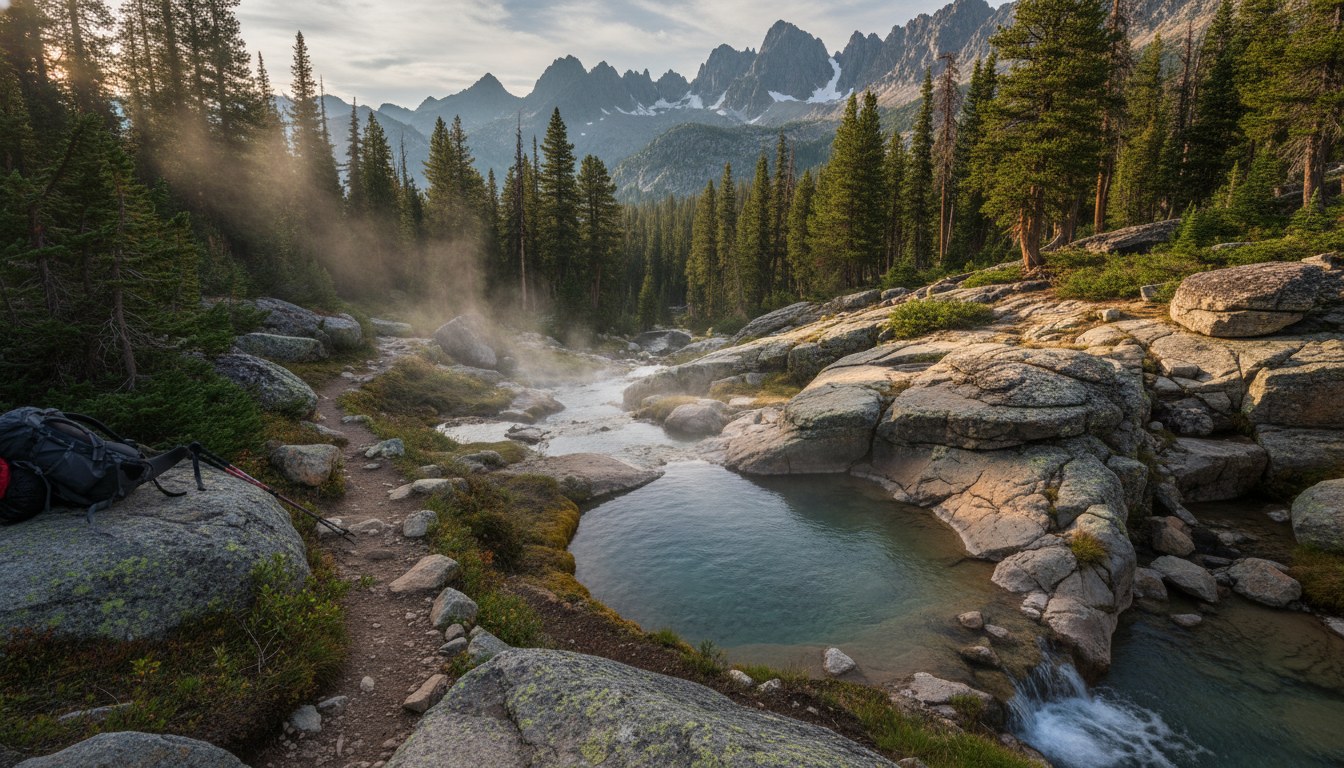
Tucked up a drainage in the Smoky Mountains east of Fairfield, Skillern is the kind of spring that rewards those willing to work for it. A 4-mile hike up a gentle valley leads to a single perfect soaking pool — about 8 feet across, 3 feet deep, with a sandy bottom and water holding steady around 102°F. On a weekday, you might have it entirely to yourself.
- Hike: 4 miles one way on an old mining road (moderate)
- Water temp: ~102°F
- Capacity: 4–6 people comfortably
- Season: June–October (snow covers the access road in winter)
- Cost: Free (USFS land)
Essential Gear for Idaho Primitive Springs
- Quick-dry towel: Regular cotton towels are heavy and slow to dry on the trail
- Water shoes or sport sandals: Pool bottoms can be rocky, silty, or slippery
- Headlamp: If you plan to soak after sunset (you should — it's magical)
- Trash bag: Pack-it-out bag for all waste
- Water bottle: Minimum 1 liter per person — hot soaking dehydrates you fast
- Offline maps: Download the area in Google Maps or use Gaia GPS — there's no cell service at most primitive springs
- First aid kit: Basic kit including burn cream (accidental contact with too-hot water happens)
Frequently Asked Questions
Are Idaho's primitive hot springs really free?
Most are, yes. Springs on National Forest land (USFS) are free to visit. A few, like Burgdorf, charge a small fee because they're privately operated on leased land. There are no state-level fees for accessing natural hot springs.
What's the best time of year to visit Idaho hot springs?
Late summer through fall (August–October) offers the best combination of accessible roads, comfortable hiking weather, and defined soaking pools. Winter soaking is incredible but many backcountry springs become inaccessible due to road closures and snow. Read our etiquette guide before your first visit.
Is it safe to soak in primitive hot springs?
Generally yes, with precautions. Always test water temperature before entering (use your hand, not your foot). Be aware of Naegleria fowleri amoeba risk — avoid submerging your head in warm natural water. Check for unstable ground around spring vents. And always tell someone where you're going.
Can I camp at primitive hot springs?
On National Forest land, dispersed camping is generally allowed. Camp at least 200 feet from the spring source and follow Leave No Trace principles. Some popular springs (Kirkham) have adjacent developed campgrounds. Visit our camping hot springs page for springs with established camping.